Custom Cylinder Rod Machined in Sharjah to Beat a 6 Week Import
An imported industrial press bent its 110 mm cylinder rod by 3.4 mm, and a factory rod would take 6 weeks to arrive. ASAT measured the damaged rod and mating parts, machined a new rod from 20MnV6 induction hardened chrome bar to ISO h7, made new aluminium bronze bushes and pressure tested the cylinder at 250 bar.
01. Project Overview
Operational Context & Requirement
When an imported industrial pressing machine experienced sudden cylinder rod distortion, standard supply chain channels indicated extended delivery delays for a factory replacement rod. ASAT was tasked with reverse engineering and manufacturing an exact replacement rod and custom pivot bushings within our Sharjah/UAE machining facility.
02. Equipment & Component
Component Classification & Technical Parameters
Equipment Class
Heavy Industrial Machinery
Component Inspected
Custom Piston Rod & High-Load Bronze Bushings
- Bar Material
- Induction Hardened Chrome Bar (20MnV6)
- Surface Hardness
- HRC 54 – 60
- Chrome Layer Thickness
- Minimum 25 µm
- Surface Roughness
- Ra ≤ 0.2 µm
- Bushing Material
- High-Tensile Aluminum Bronze
03. Initial Issue
Observed Fault & Symptoms
Equipment Failure Manifestation
An industrial operator faced severe production downtime due to a severely bent and gouged cylinder rod on an older imported machine. Genuine OEM parts carried a 6-week foreign import lead time, necessitating rapid custom fabrication.
A bent 110mm diameter piston rod had jammed inside the cylinder gland, damaging the internal bronze wear ring and scoring the gland bore. The equipment was offline and unable to maintain production output.
04. Inspection & Diagnosis
Teardown Findings & Root Cause Analysis
Radial runout measurement confirmed a 3.4mm bend along the mid-section of the damaged rod, rendering it non-straightenable.
Thread engagement pitch and gland seal seating steps were accurately gauged using digital micrometers and pitch gauges.
The mating pivot pin bore exhibited ovality requiring a matched custom bronze sleeve bushing.
05. Repair Methodology
Engineering Overhaul & Precision Machining Work
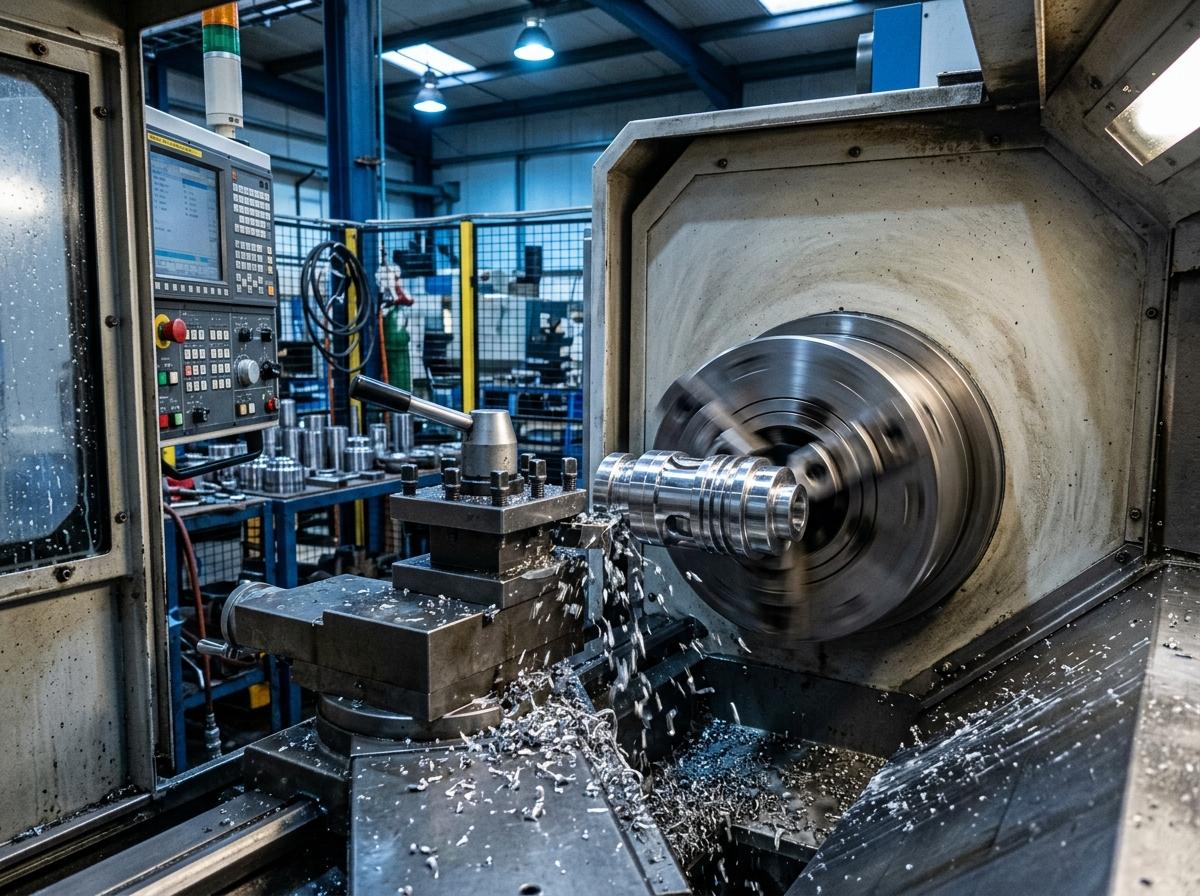
ASAT machinist engineers reverse-engineered the damaged component directly from physical measurements and mating gland dimensions. High-grade induction-hardened chrome plated steel bar stock was machined on our heavy-duty precision lathe, including precision piston mount threads and clevis pin bore. New aluminum-bronze bushings with helical grease grooves were machined concurrently.
Detailed Work Execution Scope
- Precision turning of induction-hardened chrome rod stock
- Single-point threading and shoulder radii blending
- Machining of matching aluminum-bronze pivot bushings with lubrication grooves
- Dimensional CMM / micrometer verification to ISO h7 tolerance
06. Testing & Verification
Hydrostatic Pressure Benchmark & Quality Assurance
- Total indicated runout (TIR) checked across centers, confirming under 0.02mm along the entire functional length.
- Surface finish verified below Ra 0.2 µm on running surfaces for long seal operating life.
- Trial assembly with gland seal pack to confirm smooth, binding-free glide and zero tolerance slop.
- Cylinder reassembled and pressure-tested at 250 bar without leakage.
The finished rod and bronze bushings were turned to ISO h7 dimensional fit, reassembled into the client cylinder, and passed static pressure testing with zero binding through full stroke.
07. Final Outcome
Delivered Performance & Operational Return
An imported industrial press bent its 110 mm cylinder rod by 3.4 mm, and a factory rod would take 6 weeks to arrive. ASAT measured the damaged rod and mating parts, machined a new rod from 20MnV6 induction hardened chrome bar to ISO h7, made new aluminium bronze bushes and pressure tested the cylinder at 250 bar.