Hydraulic Pump Cavitation: Causes, Warning Signs and How to Stop It
Short answer: Hydraulic pump cavitation happens when pressure at the pump inlet drops so low that oil vapour bubbles form and then collapse inside the pump, pitting the valve plate and pistons. The usual causes are a blocked suction strainer, a collapsed suction hose, oil that is too thick when cold, or low reservoir level. Most open circuit pumps need inlet vacuum kept within about -0.2 to -0.3 bar.
Cavitation is one of the leading causes of catastrophic failure in industrial and mobile hydraulic pumps. Learn to identify abnormal acoustic signatures, diagnostic suction pressure thresholds, and maintenance protocols that preserve pump longevity.
ASAT Engineering Department
Hydraulic Systems & Overhaul Division
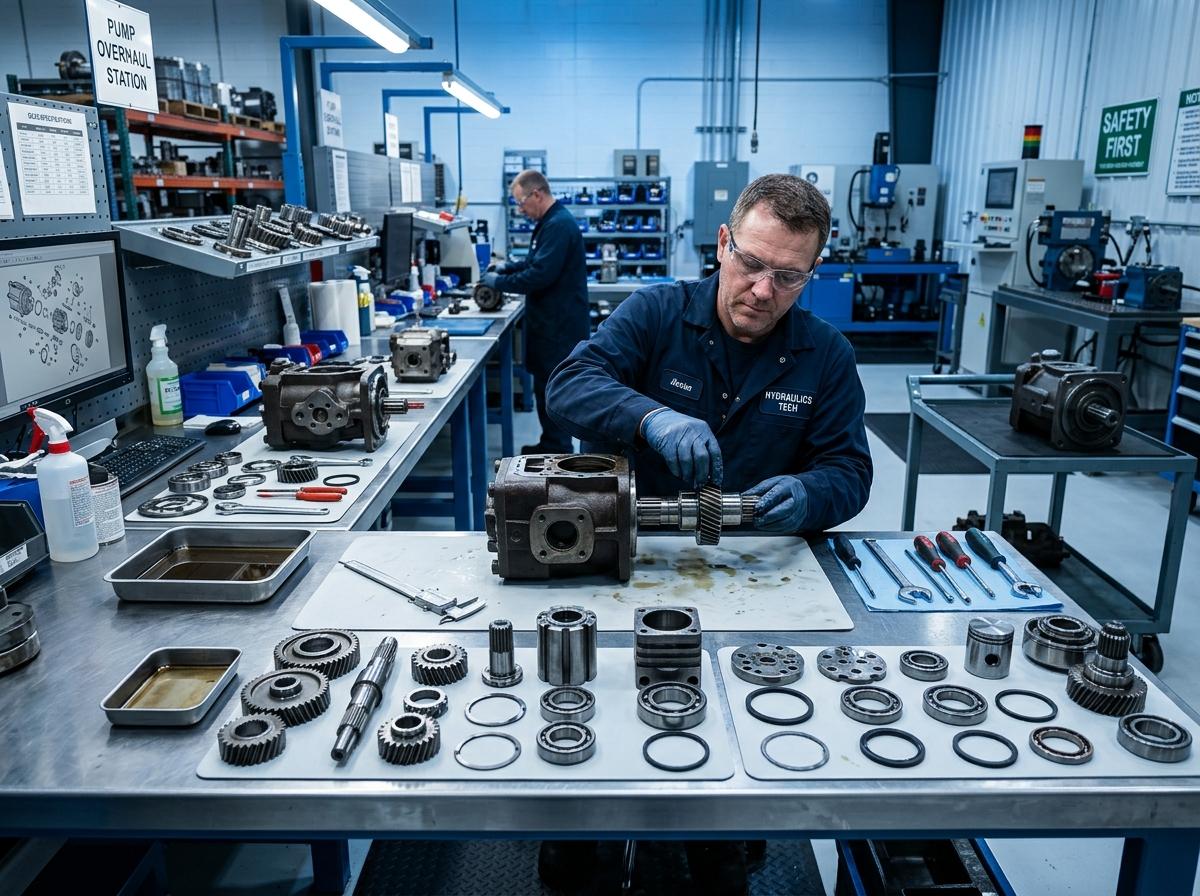
Among all mechanical failure modes encountered in high-pressure hydraulic equipment across the UAE, cavitation and aeration represent the most destructive yet preventable conditions. When fluid pressure drops below the vapor pressure of the hydraulic oil, microscopic vapor bubbles form instantaneously. As these bubbles enter the high-pressure discharge zone, they implode with localized shockwaves exceeding several thousand bars, stripping metal from valve plates, swash plates, and cylinder barrels.
Understanding Cavitation vs. Aeration
While the symptoms and damage patterns of cavitation and aeration appear remarkably similar upon pump teardown, their root physical mechanisms are fundamentally distinct:
- Vaporous Cavitation: Occurs when inlet restriction, undersized suction lines, or excessive fluid viscosity drops absolute pressure below the vapor pressure of the hydraulic oil, causing oil vapors to boil out of solution.
- Fluid Aeration: Occurs when atmospheric air is drawn into the hydraulic system through defective pump shaft seals, loose intake suction fittings, low reservoir fluid levels, or return-line splashing.
- Gaseous Cavitation (Pseudo-cavitation): Entrained dissolved air separates from fluid solution under low inlet pressure conditions before true vaporous boiling occurs.
Critical Suction Pressure Rule
Most open-circuit axial piston and vane pumps require a positive inlet pressure or a maximum vacuum not exceeding -0.2 to -0.3 bar (5 to 8 inHg). Operating continuously below this threshold accelerates swash plate erosion exponentially.
Primary Causes in Industrial Environments
In high-ambient UAE operational conditions where ambient temperatures frequently exceed 45°C, hydraulic fluids undergo rapid thermal fluctuations. Key root causes identified in our workshop overhauls include:
- Clogged Suction Strainers: Accumulated debris and varnish restrict flow into the pump inlet.
- Incorrect Fluid Viscosity: Cold-morning high viscosity spikes create severe intake depression.
- Kinked or Deteriorated Suction Hoses: Internal hose liner collapse restricting inner bore diameter without visible exterior indication.
- Inadequate Reservoir Baffling: Return oil flowing directly into the pump suction port before entrained micro-bubbles can de-aerate.
Early Warning Signs & Acoustic Profiles
Trained maintenance engineers can diagnose pump distress long before total mechanical seizure. A cavitating pump typically emits a distinct high-pitched, metallic rattling sound resembling marbles circulating inside the casing. Under aeration, the sound is often a harsh buzzing or whining accompanied by foamy, milky oil inside the reservoir sight glass and jerky actuator operation.
Preventative Maintenance Protocols
To avoid catastrophic pump teardowns and costly equipment downtime, maintenance teams should implement regular fluid cleanliness sampling, vacuum gauge monitoring at suction ports, and scheduled replacement of reservoir breather caps and suction filter elements.
ASAT Workshop Recommendation
Whenever a pump has operated under severe cavitation, the hydraulic circuit must be thoroughly flushed. Microscopic metallic spalling from the damaged pump travels directly downstream into proportional valves and cylinder seals, causing cascading secondary failures.
Workshop Rebuilding & Bench Verification
When cavitation damage has occurred, restorative precision machining is mandatory. At ASAT Hydraulic Repairing, our workshop technicians resurface scarred valve plates on precision lapping tables, replace degraded piston assemblies, and verify volumetric and mechanical efficiency on our dedicated hydraulic test bench under rated load and temperature before reinstallation.
Frequently asked questions
What does pump cavitation sound like?
- A cavitating pump usually makes a rattling sound, like marbles moving inside the casing, and the noise gets louder as the inlet restriction grows.
What is the difference between cavitation and aeration?
- Cavitation is vapour bubbles forming and collapsing at low inlet pressure. Aeration is air mixed into the oil, which causes foamy oil in the reservoir and a harsh buzzing or whining sound. Both damage pumps, and they are often found together.
Can a cavitated pump be repaired?
- Often yes. Pitted valve plates can be lapped, worn slipper shoes and bearings replaced, and the rotating group restored or renewed. We confirm the repair after teardown and bench test the pump before return.
Related Workshop Engineering Services
Hydraulic Pump and Motor Repair
Pump overhaul with bench flow and pressure testing.
Related Engineering Insights
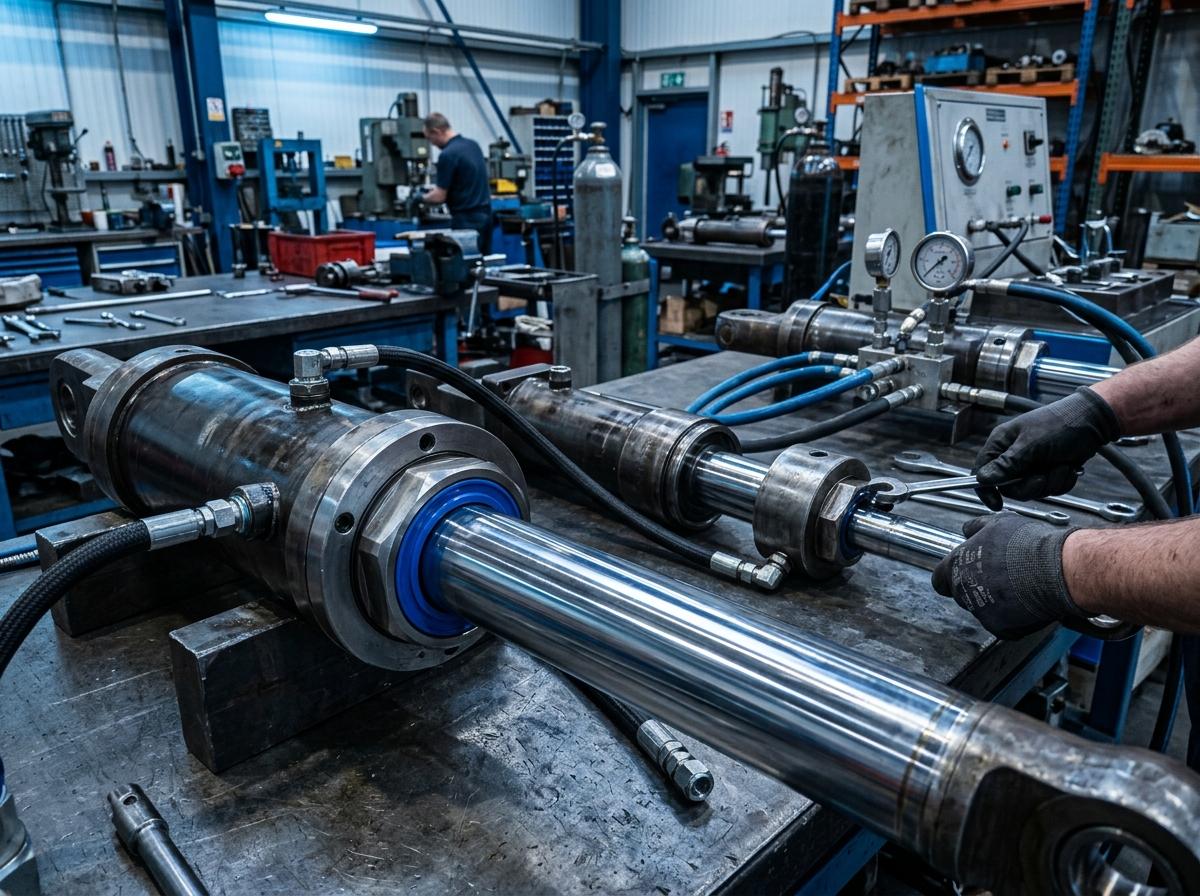
Why Hydraulic Cylinder Seals Fail in UAE Conditions, and How to Fix It
A practical guide to diagnosing extrusion damage, thermal hardening, abrasive scoring, and diesel effect across heavy equipment cylinder seals.
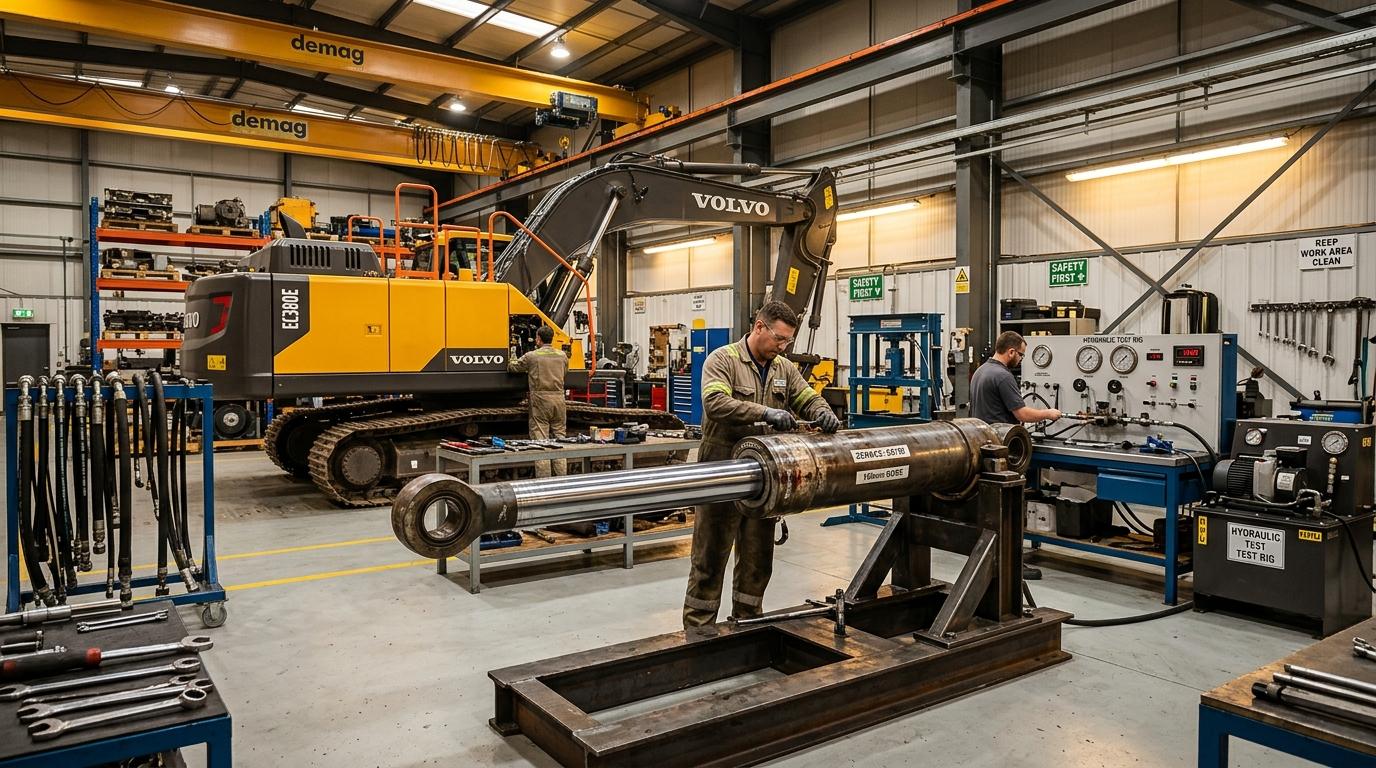
ISO 4406 Oil Cleanliness Codes Explained for UAE Hydraulic Systems
Why fluid contamination accounts for up to 80% of hydraulic component failures, and how to maintain strict ISO particulate target codes.
Repair or Replace? Limits for Hydraulic Cylinder Rods and Barrels
Engineering criteria for assessing whether scored cylinder rods, damaged eye mounts, and worn barrels should be precision remanufactured or replaced.
Have a Hydraulic Cylinder, Pump, or Valve Requiring Repair?
Consult directly with ASAT Hydraulic Repairing's senior technicians in the UAE. We provide comprehensive root-cause diagnostics, precise workshop teardowns, OEM-standard rebuilding, and certified pressure testing up to 350 bar.
Request a Service Quote
Share your machinery details for immediate technical evaluation.